Programmatic Trading Strategies: Unleashing Market Potential
In the dynamic landscape of financial markets, automation has emerged as a transformative force. Automated trading strategies leverage sophisticated software to execute trades at {highfrequencies, capitalizing on market inefficiencies and trends. These strategies can be customized to diverse investment goals, enabling traders to reduce risk and enhance returns.
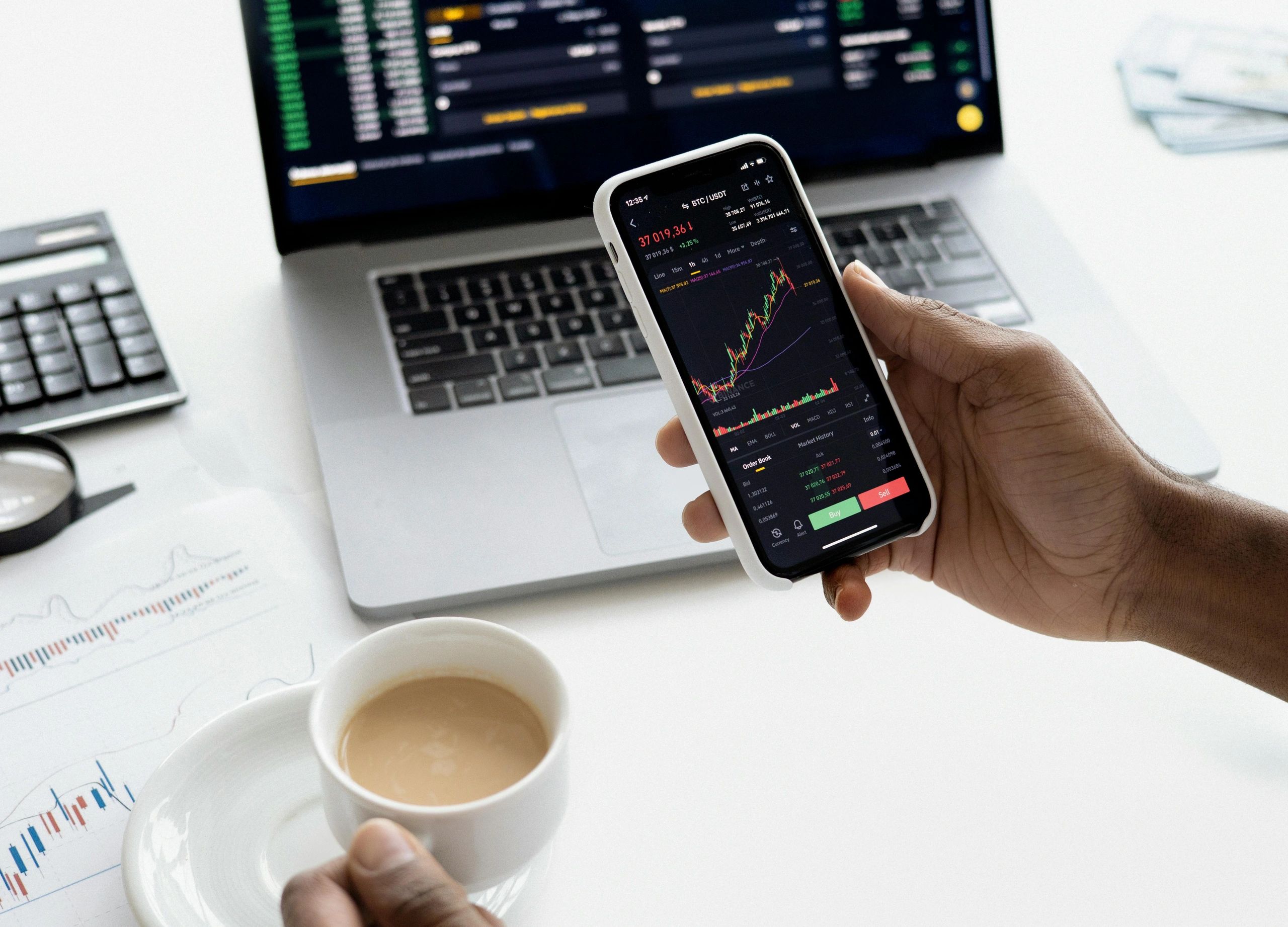
- Automated trading strategies can analyze vast amounts of market data in real-time, identifying patterns and trends that may be imperceptible to human traders.
- By executing trades at lightning speed, these systems can capitalize on fleeting price movements and minimize slippage losses.
- Moreover, automated trading strategies can operate continuously, overcoming the limitations of human attention spans.
As technology continues to evolve, {automated trading strategies are poised{ to revolutionize the financial markets, offering unprecedented accessibility.
Automated Trading: The Finance Revolution
Algorithmic trading will undoubtedly revolutionize the financial landscape. With its speed, efficiency, and precision, algorithmic strategies can analyze vast amounts of data, execute trades at lightning speed, and identify profitable opportunities that are often invisible to human traders. As technology continues to advance, we can expect to see even more sophisticated algorithms emerge, capable of making complex decisions and adapting to market conditions in real time. This trend is already transforming the industry, with institutional investors increasingly relying on algorithmic trading platforms to manage their portfolios and maximize returns.
- Furthermore, algorithmic trading offers a number of advantages over traditional trading methods. It can reduce emotional biases, minimize transaction costs, and improve overall risk management.
- Moreover, algorithmic strategies can be customized to meet the specific needs of individual investors.
- However, it's important to note that algorithmic trading also presents some challenges. The complexity of these systems requires specialized expertise and careful monitoring, and there is always the risk of unforeseen market events or technical glitches.
Despite these challenges, the future of finance is undeniably intertwined with algorithmic trading. As this technology continues to evolve, it will play an increasingly important role in shaping the way we invest and manage our finances.
Dominating Automated Trading Strategies
Navigating the intricate world of automated trading demands a deep understanding of both financial markets and the sophisticated algorithms that drive these systems. A successful automated trading method involves meticulous planning, rigorous backtesting, and continuous optimization. Traders must persistently evaluate market trends, identify opportunities, and implement trading parameters that align with their investment goals.
- Moreover, a comprehensive understanding of technical analysis is crucial for constructing effective automated trading strategies. Traders should immerse themselves with various charting indicators and numerical models to interpret market data effectively.
- Furthermore, risk management is paramount in automated trading. Traders must establish robust stop-loss orders, position sizing approaches, and diversification tactics to mitigate potential drawdowns.
Quantitative Trading: A Deep Dive into Success
The realm of trading is undergoing a profound shift as quantitative strategies take center stage. Quantitative trading, the art and science of leveraging analytics to create profitable trading signals, has become an increasingly dominant force in financial markets.
At its core, quantitative trading relies on advanced algorithms that scrutinize vast amounts of financial data to identify patterns. These algorithms are constantly refined and optimized through rigorous testing and simulation. The result is a systematic approach to trading that aims to eliminate emotional biases, leading to more consistent returns.
- Profitability in quantitative trading is driven by several key components.
- Data quality is paramount, as algorithms are only as good as the data they utilize on.
- Algorithm design and implementation play a critical role in obtaining desired results.
- Volatility management is crucial to preserve capital and promote long-term success.
Additionally, the field of quantitative trading is constantly progressing, with new tools emerging regularly. This includes machine learning, which holds immense opportunity for improving trading strategies.
Creating Profitable Automated Trading Systems
Constructing a lucrative automated trading system is a demanding endeavor that demands a deep understanding of both financial markets and programming concepts. It involves meticulous design of algorithms that can analyze market data, identify trading signals, and execute trades with precision.
- One of the key aspects of building a profitable system is historical analysis. This process entails testing your trading strategies on past market data to evaluate their effectiveness.
- Risk management is another important consideration. A well-designed system should have implemented safeguards to minimize potential losses.
- Continuous observation and refinement are critical for long-term returns. Market conditions are constantly evolving, so your system should be able to adjust accordingly.
Building a profitable automated trading system is not a get-rich-quick scheme. It demands time, effort, and commitment. However, for those who are willing to put in the work, it can be a lucrative endeavor.
The Science Behind Automated Trading Strategies
Automated trading strategies rely on sophisticated algorithms that leverage complex mathematical models and statistical analysis to execute trades automatically. These systems analyze vast amounts of market data, identifying patterns and trends that human traders might miss. By utilizing these insights, automated trading can potentially optimize trading read more performance, reducing emotional bias and executing trades with speed and precision. The effectiveness of automated trading strategies often relies upon the quality of the underlying data, the accuracy of the algorithms, and the ability to adjust to changing market conditions.
Unlocking Alpha with Algorithmic Trading
Algorithmic trading offers a unique opportunity to discover alpha within financial markets. By utilizing sophisticated algorithms, traders can carry out trades at impeccable speed, reducing emotional impacts that can sometimes hinder manual trading strategies. These programmatic systems continuously monitor vast pools of information, identifying opportunities that may be imperceptible by conventional traders.
However, securing alpha through algorithmic trading is a challenging endeavor. It requires a deep understanding of financial markets, programming scripts, and statistical analysis. Additionally, continuous refinement of algorithms is essential to remain competitive in the ever-evolving landscape of financial trading.
Programmed Trading Platforms: Your Gateway to Efficiency
In the dynamic realm of finance, efficiency is paramount. Digital trading platforms present a groundbreaking solution for investors seeking to optimize their trading strategies. These platforms leverage cutting-edge technology to execute trades at lightning speeds, eliminating the influence of human emotion and facilitating data-driven decision-making. Utilizing sophisticated algorithms, automated trading platforms can evaluate vast quantities of market data in real time, identifying profitable opportunities that may go unnoticed by human traders.
By simplifying the trading process, these platforms release valuable time for investors to devote on other aspects of their financial journeys. Moreover, automated trading platforms often provide comprehensive analytics and reporting tools, facilitating traders to gauge their results carefully.
Automated Trading Strategies
For many investors, the concept of automated trading strategies can seem shrouded in mystery. But, these strategies simply involve utilizing computer programs to execute trades based on predefined rules and parameters. By removing emotion from the equation, automated trading aims to maximize returns while controlling risk.
There are various types of automated trading strategies available, each with its own specific approach to market analysis and trade execution. Some popular examples include trend-following strategies, mean reversion strategies, and arbitrage strategies.
- Comprehending the mechanics of automated trading can empower investors to make more informed decisions about their investment portfolios.
- By leveraging sophisticated algorithms, these strategies can scan vast amounts of market data and identify profitable opportunities that may be missed by human traders.
Despite the potential benefits, it's crucial to approach automated trading with caution. Thorough research, diligent backtesting, and a well-defined risk management plan are essential for success in this dynamic and ever-evolving market landscape.
Harnessing Performance with Automated Trading Algorithms
Automated trading algorithms present a compelling strategy to enhance performance in the financial markets. By leveraging sophisticated computational models and automated execution, these systems evaluate market data in real-time, identifying profitable trading opportunities. This reduces the impact of irrational decision-making and allows for swift order execution, potentially leading to improved returns.
A well-designed automated trading system can execute a wide range of trading strategies, from trend following to market making. The key to success lies in thoroughly choosing the appropriate algorithm, optimizing its parameters, and periodically monitoring its performance.
- Furthermore, automated trading platforms often offer powerful risk management tools, enabling traders to mitigate potential losses and secure their capital.
- Conversely, it's essential to recognize that automated trading is not a foolproof path to riches. It demands technical expertise, diligent market research, and ongoing monitoring to ensure optimal performance.
Advanced Techniques in Algorithmic Trading
Algorithmic trading has evolved significantly, utilizing advanced techniques to maximize returns and manage risk. These techniques often employ complex mathematical models, machine learning algorithms, and high-frequency strategies. Quantitative analysis plays a essential role in identifying patterns, predicting market trends, and triggering trades with exceptional speed and precision.
Some popular advanced techniques include momentum trading, news aggregation, and reinforcement learning. These methods regularly evolve as traders strive to gain an edge in the dynamic market landscape.
Navigating the World of Automated Trading
The realm of automated trading presents a myriad of possibilities for both seasoned and novice investors. By leveraging cutting-edge technology, these strategies can execute trades with remarkable speed, often surpassing the capabilities of traditional traders. However, venturing into this sophisticated landscape requires a keen awareness of its intricacies. It's crucial to conduct in-depth investigation and develop a well-defined trading approach before implementing any automated tool.
- Understanding the fundamentals of market analysis is paramount for success in automated trading.
- Choosing the right software that aligns with your risk tolerance is a vital consideration.
- Continuous monitoring of your trading strategy is essential for adjustment.
Python for Automated Trading: A Comprehensive Guide
Unlock the capabilities of automated trading with Python. This comprehensive guide will provide you with the knowledge and tools necessary to build your own trading algorithms. Learn essentials such as price information analysis, order execution, and risk management. We'll explore popular Python libraries like Scikit-learn for data manipulation and automated strategies. Whether you're a beginner or an experienced trader, this guide will accelerate your journey into the world of automated trading.
- Get started with Python fundamentals for finance and trading
- Understand common trading strategies and their implementation in Python
- Utilize essential libraries like Pandas, NumPy, and Matplotlib
- Test your algorithms on historical data to improve performance
- Deploy your trading strategies in a live environment
Python offers a powerful and flexible framework for automated trading, allowing you to customize your strategies to meet your specific objectives.
Testing and Optimizing Automated Strategies
Before diving into the live markets with an automated trading system, rigorous backtesting is paramount. This process involves evaluating your strategy on historical data to assess its effectiveness in various market conditions. By meticulously examining the results, you can identify strengths and weaknesses, ultimately leading to enhancement. Optimization aims to fine-tune your system's parameters, such as risk management, to maximize its returns while minimizing volatility. A well-configured strategy will demonstrate consistent results even in fluctuating market environments.
- Furthermore, it's crucial to conduct thorough stop-loss implementation analysis during backtesting to ensure your system can survive market shocks.
- In conclusion, the combination of robust backtesting and continuous optimization is essential for developing profitable and sustainable automated trading systems.
Strategies for Mitigating Risk in Automated Trading Systems
Automated trading systems yield the potential for significant returns, but they also introduce a range of novel risks. Strategic risk management is indispensable to safeguard the profitable success of any automated trading platform. Implementers must consistently identify potential risks and develop mitigation tactics to reduce their impact.
A well-defined risk management structure should include factors such as capital allocation, exit strategies, and performance evaluation. Regular monitoring and optimization of the risk management protocol are necessary to adapt to changing market conditions.
Unpacking the Legal Framework for Automated Trading
The realm of automated trading presents a unique legal landscape. As algorithmic platforms increasingly influence market transactions, regulatory bodies grapple with issues such as transparency and the potential for systemic risk. Deciphering this evolving legal framework is essential for actors in the automated trading space to promote compliance and mitigate exposure.
A key emphasis of regulators is preventing fraudulent activity. Algorithmic trading systems, while capable of executing trades at high speeds, can also be exploited for market manipulation. Regulatory frameworks are constantly evolving to counter these challenges and protect the integrity of financial markets.
- Regulatory bodies worldwide are enforcing new rules and guidelines to govern automated trading practices.
- Accountability requirements are being strengthened to shed light on the inner workings of algorithmic trading strategies.
- Compliance with these regulations is mandatory for all participants in the automated trading market to mitigate legal penalties and reputational damage.
Automated Trading Ethics: Responsible Innovation Development
The burgeoning field of automated trading presents a compelling opportunity to optimize financial markets and enhance efficiency. However, alongside this potential for growth lies the imperative to ensure ethical considerations are woven into the very fabric of algorithmic design and deployment. Visibility in algorithmic decision-making processes is crucial to building trust and fostering Confidence within the financial ecosystem. Moreover, rigorous Analysis of automated trading systems for potential biases and unintended consequences is paramount to mitigating risks and safeguarding market integrity. By embracing a proactive approach to ethical Deployment, we can harness the transformative power of automated trading while upholding the highest standards of responsibility and fairness.
Trading Automation: Trends and Future Directions
The trading automation arena is constantly evolving, driven by innovations in artificial intelligence. One prominent trend is the rising adoption of web-hosted platforms, enabling traders to expand their operations smoothly. Another significant development is the integration of sophisticated data analysis, allowing for data-driven trading decisions. Examining ahead, future trends suggest that automation will play an even more significant role in investment strategies.
This trend is fueled by the desire for speed, as well as the increasing sophistication of modern financial systems. As technology continues to advance, we can expect continued breakthroughs in trading automation, transforming the future of the industry.
Programmed Trading for Novices
Jumping into the world of investing can seem overwhelming, but algorithmic trading offers a intriguing way to participate. For novices, it presents an chance to learn the financial world without the anxiety of full-time attention.
- Automated trading utilizes pre-defined rules to execute trades automatically, eliminating the psychological element often present in manual trading.
- While it involves initial exploration to understand the concepts, automated trading can be a powerful tool for newcomers looking to optimize their trading experience.
Boosting Your Trading with Automation
Automation presents a powerful way to maximize your trading performance. By utilizing automated tools, you can trigger trades efficiently, reduce emotional impact, and release your time to focus on other dimensions of your trading endeavor.
- Automating tasks like order submission can guarantee that you don't overlook profitable moments.
- Simulating strategies using historical data offers valuable insights and helps you improve your approach before implementing it in live markets.
- Capital allocation can be streamlined through algorithmic tools, mitigating potential losses.
As you expand your trading activities, automation becomes increasingly vital for preserving consistency and effectiveness.